
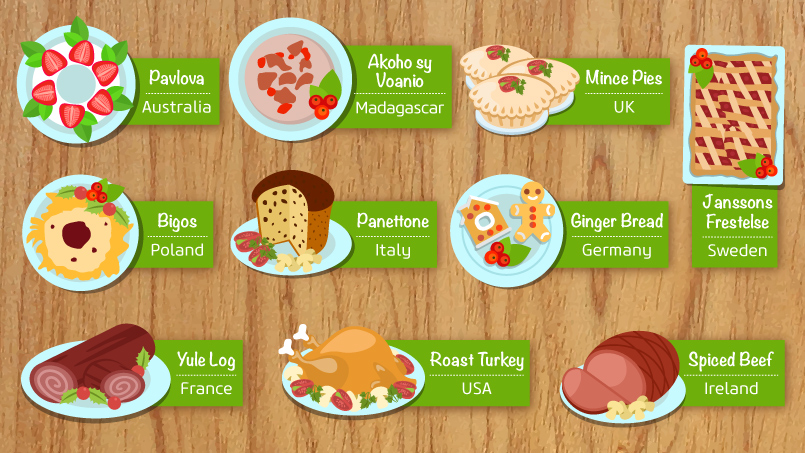
1) Bûche de Noël (Yule Log) — France
A classic French Christmas dessert, the bûche de Noël is a rolled sponge cake decorated to resemble a log—traditionally linked to the old custom of burning a Yule log during the holiday season.
What it tastes like: chocolate, coffee, vanilla buttercream (varies by region)
How to try it: look for French bakeries; try a simplified roll cake at home.
Language tip (French): bûche (log), Noël (Christmas), gâteau (cake)
2. Gingerbread House — Germany
The gingerbread house tradition became popular after the Brothers Grimm story “Hansel and Gretel” helped cement the image of a candy-covered cottage in the imagination.
What it tastes like: warm spices (ginger, cinnamon, clove), often with icing
How to try it: buy a kit, or bake gingerbread and make it a family activity.
Language tip (German): Lebkuchen (gingerbread)
3. Pavlova — Australia & New Zealand
A celebratory dessert named after ballerina Anna Pavlova, it’s popular in Australia and New Zealand—especially fitting for southern-hemisphere Christmas celebrations.
What it tastes like: crisp meringue, soft center, whipped cream, fresh fruit
4. Panettone — Italy
Panettone is a sweet bread loaf originally from Milan; the word comes from panetto, meaning a small loaf cake.
What it tastes like: buttery brioche-like bread with citrus and dried fruit
How to try it: toast slices and serve with espresso, hot chocolate, or custard.
Language tip (Italian): dolce (sweet), pane (bread)
5. Roast Turkey — United States
A classic centerpiece in American holiday meals, popularized historically as an affordable option “large enough to feed a crowd.”
What it tastes like: savory roast meat, often with gravy and seasonal sides
How to try it: if a full turkey is too much, roast turkey breast works well.
6. Jansson’s Frestelse (Jansson’s Temptation) — Sweden
A creamy potato-and-anchovy casserole and a Swedish Christmas classic, often described as comfort food with a salty-sweet depth.
What it tastes like: creamy potatoes with umami richness
How to try it: use Swedish-style sprats/anchovies and bake until golden.
Language tip (Swedish): jul (Christmas), mat (food)
7. Spiced Beef — Ireland
Served cold and thinly sliced, spiced beef is a holiday favorite in many Irish households and works beautifully on buffets.
What it tastes like: savory beef with warming spice notes
How to try it: pair with mustard, pickles, or rye bread for an easy festive plate.
8. Mince Pies — United Kingdom
These sweet pies are tied to British tradition; the historical roots go back centuries, with spice-and-fruit combinations influenced by older culinary exchange.
What it tastes like: rich dried fruit, warming spices, buttery pastry
How to try it: serve warm with tea or a scoop of vanilla ice cream.
9. Bigos (Hunter’s Stew) — Poland
Bigos is a hearty meat-and-cabbage stew, widely known as a traditional Polish dish and often associated with festive winter meals.
What it tastes like: tangy, smoky, deeply savory (especially when reheated)
How to try it: if you cook it, let it rest overnight—many say it’s even better the next day.
10. Akoho sy Voanio — Madagascar
Since Christmas in Madagascar falls during summer, a “fresh summer chicken dish” prepared with rice and coconut is a local favorite.
What it tastes like: light, aromatic, coconut-forward
How to try it: use coconut milk with ginger/garlic and serve with rice.